
Blog
Why Can’t Robots Click “I’m Not a robot” Boxes?
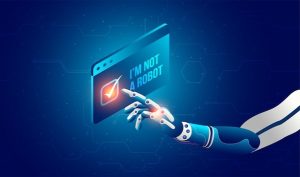
How Come Robots Can’t Complete the “I’m Not a robot” CAPTCHA?
In the current digital era, CAPTCHAs, which are meant to verify that the person engaging with the website is, in fact, a human, have become a standard feature on websites. The “I’m not a robot” CAPTCHA is one of the most well-known varieties; it requires users to tick a box to demonstrate their humanity. But why do automated bots, or robots, find it difficult to complete this basic task?
It appears paradoxical at first: if robots can execute intricate activities like driving, chess playing, and even surgery, why can’t they simply check a box? The clever technology underlying the CAPTCHA holds the solution.
The Operation of CAPTCHA
The check box There’s more to CAPTCHA than just checking a box. The system records more information when a user interacts with it than just the click. It examines how the user interacts with the page, including how the mouse moves and when they click. Bots find it difficult to replicate the organic, somewhat random patterns in movement that human users exhibit by nature.
The following are the main causes of bots failing these tests:
-
Mouse Actions and Attitudes
The CAPTCHA system tracks your mouse movements, the time it takes you to transfer the pointer to the box, and your motions as you navigate around the page before you click that checkbox. A human’s mouse path is random and flowing, whereas a robot’s typically moves in robotic, straight lines. Bots struggle to mimic these small behavioral variations.
-
Time and Communication
It takes a while for humans to click, move the mouse, and process information. Conversely, bots ma
y complete these activities far more quickly—virtually instantly. These abnormal timing patterns are recognized by CAPTCHA systems, which makes it more difficult for bots to fool the system.
-
Browser Fingerprinting
To establish whether a user is human, CAPTCHA systems also rely on information from the browser and device. It is possible to gather and examine data on cookies, IP addresses, browser versions, and other unobserved factors. Bots frequently work in settings that are simpler and lack the depth of a human user’s browsing session.
-
Awareness of Context
Even the most intelligent bots follow pre-written scripts or guidelines to function. On the other hand, humans are aware of the context of their actions. While you’re probably reading and navigating the page instinctively when you click the checkbox, bots find it difficult to replicate this level of comprehension and natural flow.
The Significance of CAPTCHAs
Websites are shielded by CAPTCHAs from bots that could carry out harmful operations like data scrapin
g, spamming, or DDoS assaults. Websites can safeguard user data and maintain the integrity of their services by making it difficult for bots to get around the CAPTCHA.
The Prospects for CAPTCHAs
CAPTCHA technology is changing as bots become more intelligent. For instance, users of Google’s reCAPTCHA v3 are not required to click any boxes at all. Rather, it operates in the background, analyzing user behavior through sophisticated algorithms to identify if the user is a bot or a human.
Both sides of the ongoing conflict between CAPTCHAs and bots will see technological advancements. But for the time being, the “I’m not a robot” button continues to be a straightforward yet useful tool for verifying users is real.
 +94 112 375 656
 info@apts.lk
 422/3,Galle Road, Colombo 3, Sri Lanka