
Blog
Virtual Reality and Its Applications in Healthcare
Introduction
Virtual reality, or VR, is changing several industries, including healthcare. It is no longer only a tool for games and entertainment. VR’s immersive and interactive qualities are being used to enhance medical education, treatment approaches, and patient care. Here’s a look at how virtual reality is changing the healthcare sector.
Medical Training and Education
Medical education and training are one of the most important uses of virtual reality in healthcare. Medical professionals and students can train and refine their abilities in a risk-free environment by using virtual reality (VR) to create realistic simulations of surgical procedures. With the use of this technology, one can practice repeatedly, receive quick feedback, and experience a variety of circumstances that may not always be available in real life.
Pain Management
Virtual reality is a useful technique for managing pain. VR can lessen a patient’s sense of pain by engrossing them in soothing and diverting virtual settings. This method has been especially helpful in treating burn injuries, persistent pain, and pain during medical operations. Research has demonstrated that patients who use virtual reality (VR) report much lower pain levels—sometimes even lower than those who use more conventional pain management techniques.
Mental Health Therapy
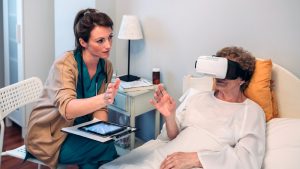
Another field where VR is making major progress is mental health therapy. In virtual reality (VR)environments, patients undergoing exposure therapy can face and manage their concerns in a safe and regulated environment. For instance, exposing people with PTSD, anxiety, or phobias to their triggers progressively in a virtual environment can help them develop coping skills. VR is also utilized in mindfulness and relaxation practices, which promote general mental health and a decrease in stress.
Rehabilitation
VR is changing restoration by giving locks in and persuading works out for patients recuperating from strokes, wounds, or surgeries. VR-based rehab programs can be custom fitted to patients’ needs, following their advance and altering the trouble level as they move forward. This personalized approach improves recovery viability and makes the method more agreeable for patients.
Specialists are utilizing VR to arrange and recreate complex surgeries sometimes recently performing them on patients. By making a 3D demonstration of a patient’s life structures, VR permits specialists to investigate diverse approaches and expect potential challenges. This arrangement can lead to more exact and fruitful results, decreasing the dangers related to surgeries.
Patient Education and Engagement
VR can moreover be utilized to teach patients approximately their conditions and medicines. By visualizing their life structures and the impacts of distinctive medicines in a virtual space, patients can pick up a much better and stronger understanding of their wellbeing. This improved understanding can lead to made strides persistent engagement, compliance with treatment plans, and in general fulfillment with care.
Remote Consultations and Telemedicine
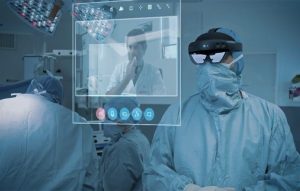
Within the period of telemedicine, VR is taking farther discussions to another level. VR stages empower healthcare suppliers to conduct virtual meetings, where they can associate with patients in a recreated environment. This will be especially valuable for pros who ought to look at patients in detail or collaborate with other healthcare experts over diverse areas.
Enhancing Quality of Life for Patients
VR is additionally being utilized to make strides towards the quality of life for patients with long-term ailments. For example, VR can give virtual travel encounters for patients who are out of commission, advertising them an elude from their everyday schedule and progressing their mental wellbeing. So also, VR exercises can be utilized in nursing homes and helped living offices to lock in inhabitants and upgrade their cognitive capacities.
Conclusion
The applications of VR in healthcare are endless and shifted, advertising inventive arrangements to a few of the industry’s most squeezing challenges. From preparation and instruction to torment administration, mental wellbeing treatment, and understanding engagement, VR is demonstrating to be a capable device in improving healthcare conveyance. As innovation proceeds to development, the integration of VR into healthcare will likely extend, driving to indeed more groundbreaking improvements and made strides understanding results.
In outline, VR isn’t fair a futuristic concept; it may be a present-day reality that’s reshaping healthcare. Grasping this innovation can lead to more successful medicines, superior quiet encounters, and a more proficient healthcare framework.
Samadhini Abeysinghe
Associate Cybersecurity Engineer
 +94 112 375 656
 info@apts.lk
 422/3,Galle Road, Colombo 3, Sri Lanka
Can someone please reach out to me. We may have opportunity to collaborate.
Thanks,
Pulasthi Samarawera
AVP – Global Alliances
Wavenet & Mediwave