
Blog
How to Deliver Successful Projects:
In today’s fast-paced technological landscape, delivering successful projects requires a strategic blend of expertise, collaboration, and innovation. With a focus on network, systems, cloud, data center, and security projects, every initiative is executed with precision and care.
The approach begins with a thorough understanding of client needs, allowing for tailored solutions that align with their goals. Clear communication and collaboration among all stakeholders are prioritized, fostering an environment where ideas can flourish. By leveraging extensive experience and cutting-edge technologies, projects are not only completed on time but also exceed expectations.
Let’s explore what effective project management entails and how it ensures successful project delivery.
- What Is Project Delivery?
- Why Do projects fail?
-
A) What is project delivery?
In project management, project delivery relates to the process of planning, undertaking, and completing a project.
But if you’ve managed a project or been involved in its delivery, you’ll know that good project delivery requires careful planning and ongoing management. Project managers are typically responsible for overseeing this process.
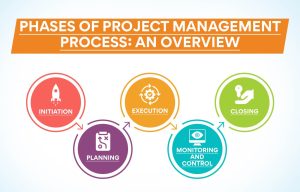
Project delivery typically involves five phases, known as the ‘Project Life Cycle.’ These are:
- Phase 1: Initiation. In this phase, you will identify project goals, create a business case, compose a project charter, and compile a list of stakeholders.
- Phase 2: Planning. Here, you will scope out the project, build a project plan, set a baseline, and define roles and responsibilities.
- Phase 3: Execution. Key tasks include assigning resources to the project, managing these resources, executing the project plan, and fixing issues as they arise.
- Phase 4: Monitoring. Monitoring includes keeping an eye on project costs, tracking progress, comparing actuals to planned costs, and controlling scope.
- Phase 5: Closing. The final phase sees project teams’ hand over the project to stakeholders, review results, approve final delivery, and record learnings.
In APTS, we don’t particularly adhere to a single project management concept or rule. We adjust according to customer needs. However, following proper processes is one of our key strengths, making APTS unique.
Steps to ensure successful project delivery:
1.Clearly define project goals and objectives
2.Develop a detailed project plan
3.Communicate effectively
4.Manage risks
5.Monitor and adjust as needed
6.Foster a positive team culture
7.Manage change but be flexible
8.Keep clients happy
9.Evaluate and improve
-
B) Why do projects fail?
- Was the project delivered on time?
- Was the project delivered within budget?
- Did the project meet stakeholder expectations?
- Have the intended benefits been delivered and realized?
1.Clearly define project goals and objectives
Make sure that all stakeholders understand and agree on what the project is supposed to accomplish.
The first step is to discuss the objectives of the project and achieve an understanding of what you need to achieve. Initially, this will be with the client. But it’s equally important to have these conversations with your wider project team too, once the scope and requirements of the project are known.
- Start with a kickoff meeting
In your kickoff meeting with the client, establish their intended outcomes. Don’t limit this to talking about the deliverables they’ve asked for. Dig down into the business results they’re hoping to see if your project is successful. Understanding the objectives behind the brief can help you spot solutions the client might not have considered.
- Record project scope and deliverables
Once you’ve established what the client needs, record everything in writing so there is no ambiguity or room for dispute when it comes to invoicing. For example,
- The exact deliverables required
- Deliverable acceptance criteria
- Budget/pricing (and what’s included – for example, number of revisions)
- Reporting/communication lines
- Timeframe (including delivery date and key milestones)
2. Develop a detailed project plan
Outline the tasks that need to be completed and assign responsibility for each one.
Next step is to develop a project plan that maps out your project timeline, milestones along the way, tasks you need to achieve, and the resources required to complete them.
Develop a plan and assign roles
Develop a comprehensive project plan that outlines the specific steps required to achieve the project goals, including timelines, milestones, and resources needed. Introduce any new technology or tools that will make the process run smoother. Make sure everyone involved in the project has access to the project plan and understands their role in the project.
Assign clear roles and responsibilities to team members to ensure that everyone knows what is expected of them. Be sure to assign roles according to skill sets and capabilities.
Create a Work Breakdown Structure
Divides a project into more manageable portions of work, which makes it easier to plan, execute and monitor.
One of the keys to a well-executed project is the Work Breakdown Structure. With each project. A visual work breakdown structure is useful for decomposing a large project into manageable chunks that can then be integrated into a project schedule.
A WBS helps organize and identify the essential task streams that should be tracked and reported in the project status.
Make it visual
A Gantt chart is a popular way to visualize a project timeline. It displays all the tasks that make up the entire project, with start and end dates, and the individuals assigned to them.
3. Communicate effectively
Communicate regularly with stakeholders in the project – including your project team and clients.
Communicate with your team
Experts all agree that communication is key. Clear, honest, regular communication between team members keeps your project on track by ensuring everyone knows what is required of them – and providing the opportunity to surface and solve any issues that pose a threat to delivery.
Communication is key to ensuring positive project outcomes. Establish regular communication channels with the project team and the stakeholders. Provide frequent updates on the project’s progress. Be transparent about any challenges or issues that arise and work collaboratively to find solutions.
And your clients
You also need to communicate regularly with your clients. Without regular updates, clients may become frustrated by a perceived lack of progress or develop unrealistic project assumptions.
Frequent communication helps manage expectations while reassuring clients about the positive progress you’re making.
In APTS, responsibilities are not divided by position. From senior leaders to junior team members, everyone contributes equally to the project’s success. From the head manager to the CEO, each one works hard on every project.
4.Manage risks
Identify potential risks and develop a plan to mitigate them.
When you’re in your project execution phase, you need to manage risks effectively. Risks are variables that impact project performance, cause delays, and reduce productivity – all threatening your project schedule, budget, and deliverables.
Assess likely project risks
- Resource risk – such as losing a key resource during the project
- Cost risk – like budget overruns
- Scope changes – which can negatively impact schedule, budget, and resourcing
- Operational risk – such as a pandemic!
- Market risks – like competitor activity or price fluctuations
- Technology risks – like hardware failure or cyber attack
Use appropriate risk management tools
Remember that risks come from every angle and can strike at any stage of the project implementation, so it’s important to monitor risks throughout the project lifecycle – not just at the start. This is where different risk management tools are useful.
- Risk register – A risk register is a document that identifies potential risks to a project and recommends solutions. This ensures you can respond quickly to any risks that do materialize.
- Risk breakdown structure – This is a hierarchical chart that breaks down the risks of a project, from top-level categories into sub-levels of risk.
- Risk burndown chart – This is a graphic visualization of risk as a project progresses. They’re used to see if project risk is decreasing or increasing and take appropriate action.
-
Monitor and adjust as needed
Keep track of the project’s progress and make adjustments as necessary to stay on track.
Project tracking is the act of monitoring the progress of your project against your project plan. It’s how you track your project KPIs and know if you need to take corrective action to protect your project outcomes.
What project tracking involves
Part of the project control process, project tracking involves:
- Assessing progress in terms of time and money
- Monitoring resources that have been used
- Knowing what tasks and milestones have been completed
Project managers typically build project status reports – or pull them from the project tracking systems they use – to access and interpret project metrics.
- Schedule Variance – shows how your project is progressing against its schedule and whether you can expect to deliver on time
- Cost Variance – shows whether you’re on track to deliver on budget, or if you need to take corrective action
- Earned Value – records the value of the work you’ve actually done (you can compare this to the value of the work you should have done by now, to see if you’re on target)
- Resource Utilization rate – measures how effectively you are using project resources
In APTS, we conduct a weekly project progress meeting to keep everyone informed about the status of each project and to update the PMO. This ensures equal attention to every project and helps us deliver it on time.
-
Foster a positive team culture
One of the key roles of a delivery manager or project manager is to ensure their team works well together – and to provide everything they need to optimize their productivity and creativity.
Managing workloads
Effective resource allocation matches people to tasks that they have the skills to complete. This ensures they’re able to do their job well, but with scope to stretch and challenge them a little, to stave off boredom and give a sense of accomplishment.
Resource utilization is about using your resources fairly and equitably. Ensuring individual workloads are manageable and work is distributed equally between the team. This reduces several project risks – including burnout, bottlenecks, and intra-team resentment.
-
Manage change but be flexible
Plan for the unexpected
First tip is to always build buffer time into your project schedule so you can absorb any minor schedule slippages without it impacting your overall delivery date. You should also plan for the unexpected.
This can save everyone a lot of trouble because it makes the process clear and persuades everyone to have a sense of ownership over their part. So, when curveballs happen it is easy to identify who is in charge, what went wrong, and how the team can help the person lagging.
Communicate change to stakeholders
When the unexpected does happen, it’s important to communicate the impact of that clearly to the client, without delay, and agree on the best way forward.
While we strive to ensure everything goes smoothly, sometimes unexpected things can happen. For example, the client might ask for something outside of the initial agreement, or I might realize that the project needs more resources than I originally estimated. In such cases, I make sure to communicate clearly with my client and explain the situation. We discuss any budget changes and get the client’s approval before proceeding.
-
Keep clients happy
Go the extra mile to delight clients and share successes along the way.
The importance of clear and regular communication with clients – to manage expectations, control costs, agree priorities, and more.
Demonstrate your dedication
As a team us in APTS, it’s also about making sure our clients know how much we care. We make sure to communicate with our clients regularly and let them know how much effort we were putting into their project. It isn’t just another project for us—we are fully invested in making it a success.
This approach can improve our overall relationship with the client, making it easier to have difficult conversations when needed, and also improving your chances of an ongoing relationship.
-
Evaluate and improve
Evaluate the project’s performance and feed that into future projects.
Speaking of projects ending, once your project is complete, you might be tempted to move straight onto the next one.
When the project is complete, conduct a final review to ensure that all project goals have been met. Document any lessons learned and share them with the team to improve future project delivery.
This post-project review is often called a project post-mortem. It’s an opportunity to assess how the project went – and use what you learn to improve future projects.
Why APTS?
At APTS, we don’t just manage projects; we redefine the deployment experience! With our unmatched expertise, we ensure every phase of your project—from strategic planning and risk assessment to seamless implementation and rigorous testing—is executed flawlessly. Our elite, industry-certified team brings decades of experience in delivering cutting-edge solutions across networking, systems, data centers, and security.
We prioritize a security-first, performance-driven approach, backed by 24/7 support to minimize downtime and achieve extraordinary results. At APTS, we turn IT challenges into remarkable opportunities for growth and innovation. Choose us as your partner and step into the future of IT project delivery—efficient, secure, and engineered for success. Elevate your business with APTS, where excellence is not just a goal; it’s our standard!
 +94 112 375 656
 info@apts.lk
 422/3,Galle Road, Colombo 3, Sri Lanka