
Blog
In today’s rapidly evolving financial landscape, banks are embracing digital transformation to provide faster, more secure, and customer-centric services. At the heart of this transformation lies the Core Banking System (CBS), the technology platform that manages essential banking operations as follows,
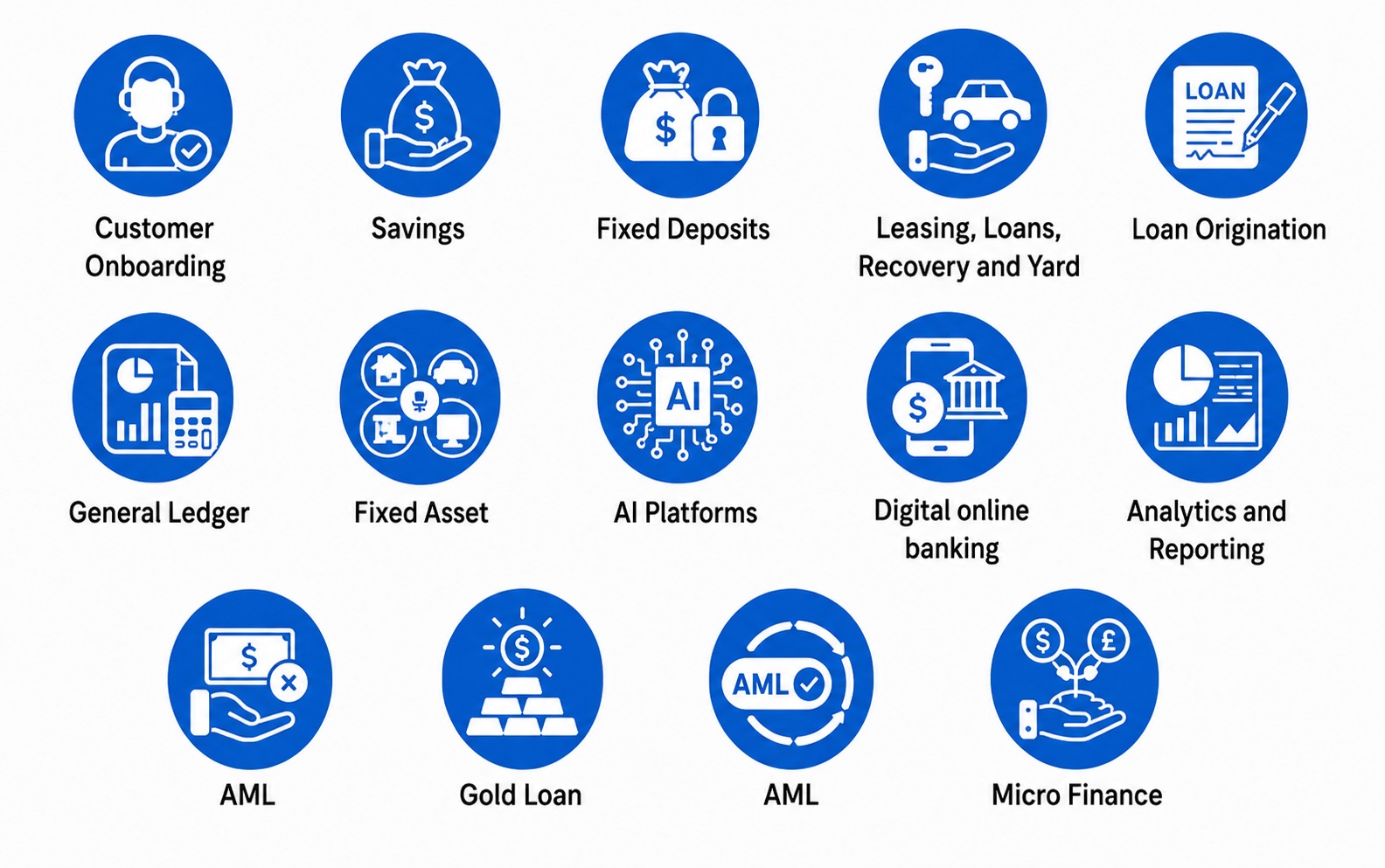
While technology powers these systems, it is the Business Analyst (BA) who ensures that business needs are accurately translated into effective technical solutions. Acting as a bridge between stakeholders and development teams, a Business Analyst plays a critical role in delivering successful core banking projects.
Understanding the Core Banking Environment
A Core Banking System is the backbone of a financial institution, enabling customers to access banking services from any branch or digital channel in real time. Since these systems handle millions of transactions and sensitive financial data, every enhancement or implementation requires careful planning, analysis, and validation.
Key Responsibilities of a Business Analyst
- Understanding Business Needs
A Business Analyst works closely with banking departments such as Retail Banking, Finance, Operations, Compliance, and Risk Management to understand their objectives and challenges. Through workshops, interviews, and discussions, the BA gathers requirements and ensures they align with the bank’s strategic goals.
- Translating Requirements into Functional Solutions
One of the primary responsibilities of a BA is converting business expectations into clear and detailed functional requirements that developers and testers can understand. Well-defined documentation minimizes misunderstandings and ensures that the delivered solution meets business expectations.
- Process Analysis and Optimization
Business Analysts evaluate existing banking processes and identify opportunities for improvement. By mapping “As-Is” and “To-Be” workflows, they help eliminate manual tasks, reduce operational risks, and improve overall efficiency.
- Supporting System Integration
Modern banking platforms interact with multiple systems, including payment gateways, mobile banking applications, credit bureaus, accounting systems, and regulatory reporting platforms. The Business Analyst helps define integration requirements, data mapping, and business rules to ensure seamless communication between systems.
- Managing User Acceptance Testing
Before a core banking solution goes live, Business Analysts coordinate User Acceptance Testing (UAT). They prepare test scenarios, support business users, validate results, and ensure that the system performs according to business requirements.
- Facilitating Communication
A successful core banking project involves business users, project managers, developers, quality assurance teams, vendors, and senior management. The Business Analyst serves as the communication bridge, ensuring that all stakeholders share a common understanding of project objectives and deliverables.
Challenges in Core Banking Projects
Core banking implementations are often large-scale and complex. Business Analysts must navigate several challenges, including:
- Changing business requirements
- Legacy system migration
- Regulatory compliance updates
- Data quality and migration issues
- Multiple stakeholder expectations
- Tight project timelines
- Organization change management
The Value of a Business Analyst
A skilled Business Analyst contributes significantly to project success by:
- Reducing requirement gaps and rework
- Improving collaboration between business and IT teams
- Ensuring compliance with banking regulations
- Supporting successful system implementations
- Enhancing operational efficiency and customer experience
Conclusion
As financial institutions continue their digital transformation journey, the role of the Business Analyst has become increasingly strategic. Beyond documenting requirements, Business Analysts act as problem solvers, facilitators, and change agents who ensure that technology solutions deliver real business outcomes.
In a core banking environment, where accuracy, security, and reliability are essential, the Business Analyst is a key contributor to building systems that support innovation, operational excellence, and exceptional customer service. Their ability to bridge the gap between business and technology makes them an indispensable part of every successful core banking project.
Article By: Dilki Fernando (Business Analyst)
 +94 112 375 656
 info@apts.lk
 422/3,Galle Road, Colombo 3, Sri Lanka